Home › Lawn Repair and Hydroseeding Overseeding
Our lawn repair hydroseeding in San Diego, CA restores thin, patchy yards to thick, uniform turf. We diagnose soil and shade issues, then apply targeted hydroseed overseeding to bare spots or entire lawns. Get an efficient solution that blends new growth seamlessly into existing grass.
Legendary Hydroseeding San Diego provides professional lawn repair hydroseeding throughout San Diego, CA, California and the surrounding area. Our licensed, insured crew delivers safe, clean, on-time work with a free estimate before anything begins. Call 619-693-1450 or request your free quote.
Practical Lawn Repair Hydroseeding for Tired San Diego Lawns
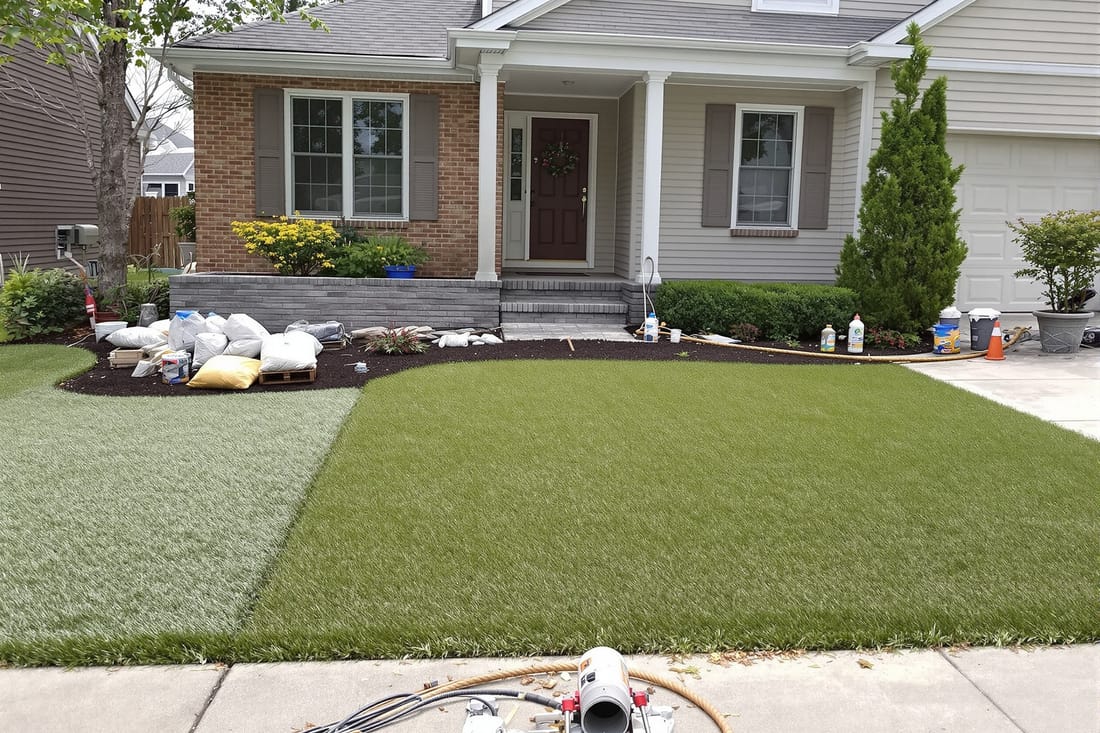
When bare patches, weeds, and dry soil start to take over your yard, you do not always need a full tear out. Lawn repair hydroseeding gives San Diego homeowners a way to rebuild weak or patchy turf using a blend of grass seed, fertilizer, mulch, and tackifier sprayed directly onto the soil. Legendary Hydroseeding San Diego focuses on repairing what can be saved and only replacing what truly needs it.
Most of our lawn repair calls in San Diego come from a few causes: compacted clay soil in older neighborhoods, heat stress near sidewalks and driveways, dog traffic that has burned or worn paths, and irrigation systems that never quite covered the whole yard. Before we bring out the hydroseeder, we walk the property, flag problem zones, and figure out whether you need targeted repair or a full overseed of the lawn.
Instead of giving a generic one-size-fits-all mix, we choose seed types based on your sun exposure, water restrictions, and how much maintenance you want to do. For example, a lawn in Clairemont with full afternoon sun and regular dog use might get a durable tall fescue blend, while a shaded backyard in La Mesa may need more shade-tolerant varieties. Lawn repair hydroseeding is not about spraying green slurry and hoping for the best. It is about matching the seed, soil prep, and watering plan to your exact yard so the new grass actually takes root and outcompetes weeds.
How Our Lawn Repair and Hydroseeding Overseeding Process Works
Our lawn repair hydroseeding process follows a clear step-by-step system so you know exactly what is happening in your yard.
1. Site inspection and soil check: We start by walking the lawn with you. We look for thin turf, bare areas, uneven spots that hold water, high traffic paths, and exposed roots. In many San Diego soils we find a hardpan layer a few inches down, so we use a probe to see how deeply water can soak.
2. Kill or cut back problem growth: If weeds are taking over, we may recommend a non selective herbicide treatment ahead of time, then a short waiting period. In other cases we simply scalp mow old grass low and bag the clippings so the new seed can reach soil.
3. Light grading and soil loosening: We dethatch or power rake compacted areas, then use rakes to break up the top half inch to one inch of soil. In small or heavily damaged spots we sometimes add a thin layer of compost to improve organic content, which is very helpful in San Diego's often lean, decomposed granite and clay based soils.
4. Hydroseeding or overseeding application: For bare or nearly bare areas we use a full hydroseeding mix with seed, starter fertilizer, cellulose or wood fiber mulch, and a tackifier that helps it cling to slopes and resist erosion. For existing lawns that just need thickening, we often overseed by broadcasting seed into the turf, then apply a lighter hydro mulch cover over the top so the seed stays moist and is not eaten by birds.
5. Watering and care plan: Right after application, we give you a written watering schedule based on the season and your irrigation system. A typical San Diego spring or fall schedule might be 3 to 4 light waterings per day for the first 2 weeks, then gradually fewer but deeper waterings. We go over mowing height, foot traffic limits, and when you can safely fertilize again.
Every step is meant to give the seed direct soil contact, steady moisture, and protection from wind and sun so it can germinate evenly across your yard.
Lawn Repair vs Full Replacement: What Makes Sense in San Diego
Not every rough looking lawn needs to be ripped out. Legendary Hydroseeding San Diego helps you choose between targeted lawn repair hydroseeding, overseeding the entire yard, or full removal and restart.
Lawn repair hydroseeding is usually best when you still have at least 40 to 50 percent decent turf, your soil structure is basically sound, and irrigation can be adjusted to cover weak spots. In these cases we focus on patch repair and overseeding thin areas. This approach is common in neighborhoods like Serra Mesa, Allied Gardens, and Chula Vista, where lawns are older but not completely gone.
Full replacement becomes smarter when you have heavy weed infestations of things like nutsedge or bermuda running through the whole yard, chronic drainage issues that create soggy zones, or soil that has been heavily compacted by vehicles or construction. In those situations, we may recommend killing off the existing lawn, addressing grading or drainage, then hydroseeding from scratch so you do not keep fighting the same problems year after year.
Budget and water use matter too. Overseeding an existing but thin lawn combined with a few targeted repair areas can be significantly less expensive than a full tear out. It also uses less water in the establishment phase because some existing roots are already in place. On the other hand, if your sprinklers are old and badly designed, we might advise correcting irrigation first, then investing in a full hydroseed so that new grass is supported properly.
Instead of pushing you into the most expensive option, we walk through these tradeoffs and show you what can realistically be improved with overseeding versus what would keep failing unless it is reset.
What Affects Cost and Results for Lawn Repair Hydroseeding
Pricing for lawn repair hydroseeding in San Diego depends on more than just the square footage. When Legendary Hydroseeding San Diego prepares estimates, we look at several real factors that affect both cost and outcome.
Access and layout: Simple front lawns with driveway access cost less per square foot than narrow side yards, steep slopes, or backyards that require long hose pulls or extra labor to reach. Corners, planter beds, and tree wells add hand work that can raise the labor time.
Soil condition: If your soil needs only light raking and dethatching, prep is quick. If we have to perform deeper decompaction, add compost, or regrade low spots, that adds time and material. San Diego lots that were graded for construction and never improved often fall into this category.
Seed blend: Cool season fescue blends suited to much of coastal and inland San Diego are cost effective, but specialized mixes for shade, high traffic, or high heat may cost slightly more. If you want to incorporate some drought tolerant species to help with local water restrictions, we factor that into the seed cost.
Weed pressure and cleanup: Lawns with high weed pressure or old thatch layers require extra prep visits or herbicide timing, which can stretch the project across several weeks to do it correctly. Skipping this step might be cheaper at first but usually leads to weeds pushing through the new lawn.
Season and watering: Hydroseeding in San Diego is most successful in fall and spring when temperatures are moderate. Hydroseeding in midsummer is still possible, but you must be ready for very consistent watering and slightly higher water bills during the first month. We talk through these seasonal realities so you can schedule the work when it fits your budget and availability to manage irrigation.
Aftercare, Local Challenges, and How to Keep Your New Lawn Thick
The weeks after lawn repair hydroseeding are just as important as the day of application. Legendary Hydroseeding San Diego treats aftercare as part of the job, not an afterthought.
Watering: In the first 10 to 14 days, the goal is to keep the hydro mulch consistently moist but not flooded. That usually means short watering cycles, often 3 to 4 times per day, especially with San Diego's coastal breezes that dry out exposed soil quickly. Once you see even germination, we help you transition to fewer, deeper waterings to build deeper roots.
Traffic control: Foot traffic, pets, and lawn equipment can crush young sprouts. We recommend keeping people and dogs off newly hydroseeded areas for at least 3 to 4 weeks. If dogs must use the area, we can help you create a temporary pet zone and use flags or temporary fencing to protect the rest.
Mowing and feeding: First mowing usually happens when the new grass reaches about 3 inches in height and is dry. We advise using a sharp blade and only removing one third of the grass height at a time. As for fertilizer, your initial hydroseed mix already includes a starter formula, so most lawns do not need additional feeding until 4 to 6 weeks in, depending on season and growth.
Local challenges: In San Diego we regularly see issues like coastal salt exposure near the beach, reflective heat damage from stucco walls, and runoff from neighboring hardscapes. If your lawn is affected by any of these, we adjust the hydroseed mix, mulch thickness, and aftercare plan so the new turf can handle those stresses.
If you follow the watering and traffic guidelines we provide, most repaired and overseeded lawns in our climate start looking noticeably thicker within 3 weeks and continue filling in over the next couple of months, giving you a denser, more resilient yard without the cost of full sod installation.